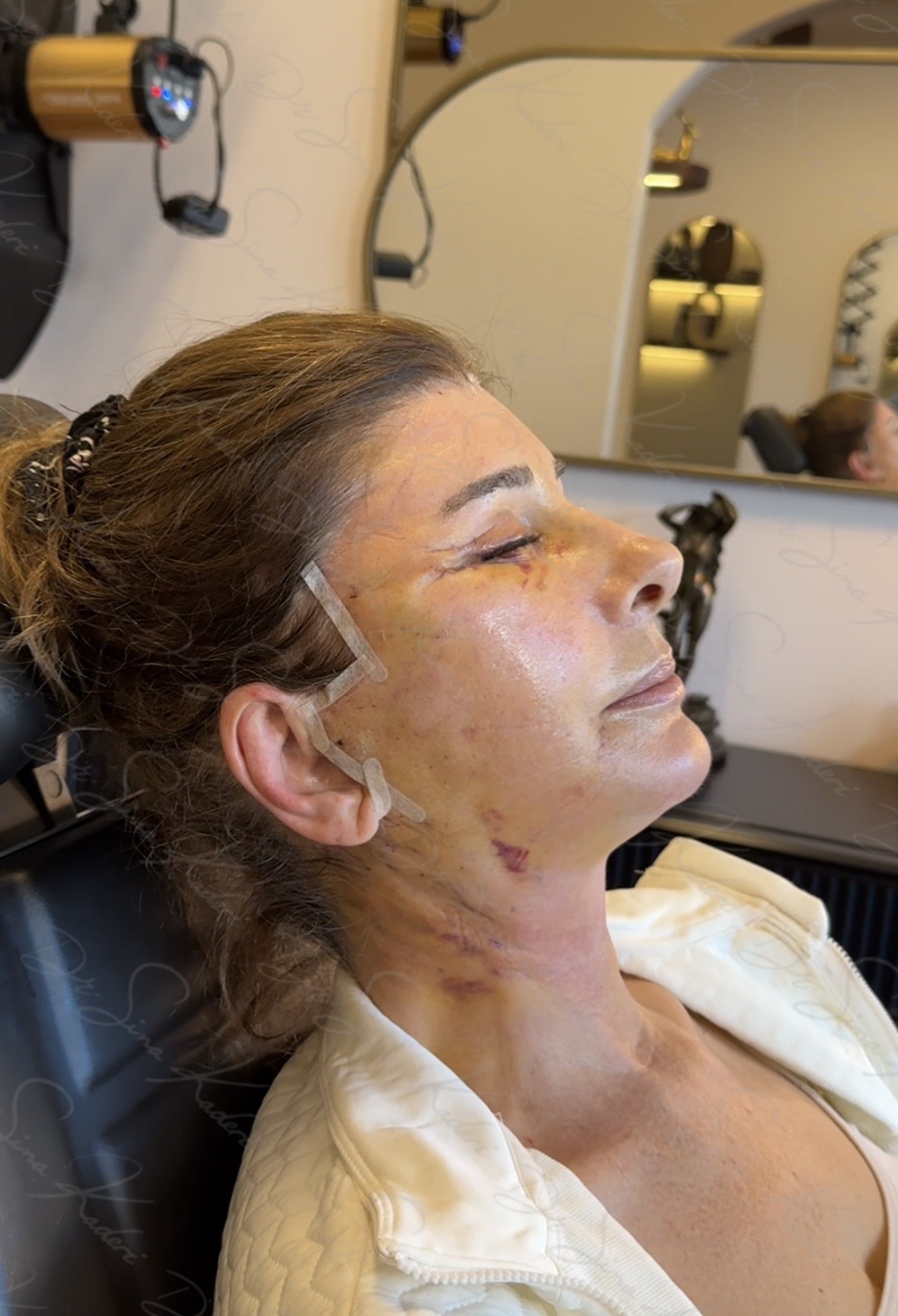
Facelift Recovery: The First 7 Days
The First 7 Days After a Total Facelift: What to Expect During Recovery
One of the questions my patients ask most frequently before undergoing facelift surgery is what the recovery process will be like. They are particularly curious about how their face will look during the first week, how much swelling and bruising they should expect, when they can take a shower, whether they will experience pain, and how soon they can return to their normal daily routines.
For me, one of the most important aspects of total facial rejuvenation surgery is exactly this: not only achieving a beautiful surgical result but also helping my patients experience a recovery process that is as comfortable and well-managed as possible.
Total facial rejuvenation is not simply about tightening sagging facial skin. In these procedures, I evaluate the upper, middle, and lower regions of the face as a whole. Depending on the patient's individual needs, I may combine a Deep Plane Face & Neck Lift with a Temporal Lift, eyelid surgery, fat grafting, or other facial reshaping procedures.
My goal is not to pull the face excessively tight or change someone's natural expression. Instead, I aim to reposition the tissues that have shifted over time into their anatomically correct positions, creating a younger, more refreshed, balanced, and natural appearance.
So, what actually happens during the first week after such a comprehensive facial rejuvenation procedure?
I would like to explain the recovery process day by day, based on my own surgical practice and the postoperative care protocol I follow with my patients.
Day 1: The First 24 Hours After Facelift Surgery
After total facial rejuvenation surgery, I generally keep my patients in the hospital for one night for observation.
The first 24 hours are particularly important to me. During this period, I closely monitor bleeding, skin circulation, and the overall condition of the operated tissues.
One of the techniques I routinely use in my surgical practice is called Hemostatic Net Sutures.
I apply these sutures to reduce the potential spaces between the skin and the underlying tissues that have been released during surgery. Their purpose is to help minimize the risk of blood or fluid accumulation and support proper tissue adaptation.
During the first day, a certain degree of swelling, tightness, and numbness is expected. Some patients may also experience mild bruising.
As I always explain to my patients before surgery, it is not appropriate to judge the aesthetic outcome based on how the face looks during these first few days. At this stage, the tissues are still in the very early phase of healing.
Day 2: Removing Hemostatic Net Sutures, the First Shower, and Dressing Changes
The second day after surgery is an important part of my postoperative care protocol.
First, I carefully examine my patient's face. I assess skin circulation, incision sites, swelling, and the overall condition of the areas treated during surgery.
If everything is progressing as expected, I remove the hemostatic net sutures that were placed during the operation.
Afterward, I allow my patient to take a shower and wash their hair. Of course, this depends on the condition of the incisions and the patient's overall recovery, and it must be done carefully to avoid disturbing the healing tissues.
Following the shower, I remove the initial surgical tapes and reassess the face. We then apply fresh tapes to the areas that require additional support.
Once these steps are completed, and provided that the patient's general condition is satisfactory, I arrange their discharge from the hospital.
For me, the fact that a patient can take a shower, wash their hair, and begin feeling more comfortable just two days after surgery is an important milestone.
Of course, this does not mean the recovery process is complete. However, I believe it is important for patients to begin returning to their daily routines in a controlled and comfortable manner from the early postoperative period.
Day 3: Is It Normal for Swelling to Increase After a Facelift?
Yes. In fact, this is something I specifically explain to my patients before surgery.
After facelift surgery, swelling generally reaches its peak during the second and third postoperative days.
During this period, we may observe swelling around the eyes, cheeks, jawline, and neck. Some areas may appear more swollen than others, and temporary asymmetry or bruising may also develop.
What I want my patients to understand is that these changes are usually a normal part of the healing process.
During a Deep Plane Facelift, we work not only on the skin but also on the deeper anatomical structures of the face. Therefore, the tissues need time to heal, and the swelling takes time to subside.
The face you see in the mirror on the third day will not be the same face you see several weeks later.
However, sudden or rapidly increasing swelling, particularly on one side of the face, significant pain, or bleeding must always be evaluated immediately. These symptoms should not simply be considered normal postoperative swelling.
Days 4–5: Facial Contours Begin to Emerge
By the fourth and fifth postoperative days, I generally observe that my patients begin to feel more comfortable.
The sensation of tightness may gradually decrease, and as the swelling slowly subsides, the new facial contours begin to become visible.
In particular, the changes we have made to the jawline, neck contour, and midface can often be seen more clearly during this period.
Of course, swelling is still present, and this is far from the final result.
At this stage, I advise my patients that they may take gentle walks, but they should avoid heavy lifting, intense physical exercise, and keeping their heads bent forward for prolonged periods.
A healthy recovery depends not only on the surgical technique but also on how carefully patients follow their postoperative instructions.
Days 6–7: What Does the Face Look Like at the End of the First Week?
By the end of the first week, we can usually observe a noticeable improvement compared with the first few postoperative days.
Swelling begins to decrease, bruising gradually fades, and the new facial contours become more visible.
Most of my patients are able to manage their basic daily activities independently during this period. However, visible signs of surgery may still be present.
There is one point I particularly want to emphasize:
The seventh day after facelift surgery is still far too early to evaluate the final surgical result.
The tissues that I have repositioned during surgery need time to heal, the swelling needs to resolve, and the face needs time to settle into its new anatomical position.
This process continues over several weeks and even months.
For this reason, I always encourage my patients to be patient and not judge their results solely by their appearance during the first week.

Compression Garments and Postoperative Care After a Deep Plane Facelift
After facelift surgery, I use a supportive facial compression garment as part of my postoperative care protocol.
In my practice, I generally recommend wearing the garment continuously for the first 10 days, followed by nighttime use for approximately two months.
The purpose is to provide controlled support to the operated tissues and help manage postoperative swelling.
Beginning in the second week, I may also recommend gentle facial massage for selected patients, depending on their healing progress.
However, there is no single postoperative routine that applies to everyone.
I adjust the care protocol individually according to the patient's skin quality, the extent of surgery, the amount of swelling, and the condition of the healing tissues.
When Can You Return to Normal Life After Facelift Surgery?
This is one of the most common questions I receive from my patients.
In fact, there are two different aspects of recovery: returning to normal social activities and achieving complete tissue healing.
These are not the same thing.
Many of my patients are able to perform their everyday activities more comfortably by the end of the first week. However, it usually takes several more weeks for the face to begin looking more natural.
By the third and fourth weeks, a significant portion of the swelling has typically subsided.
The improvements in the jawline, neck, and midface become more apparent as the tissues gradually settle.
During the second and third months, the tissues continue to soften, the sensation of tightness decreases, and the new facial contours become increasingly natural.
However, complete resolution of residual swelling, recovery from temporary sensory changes, and scar maturation may take considerably longer.
What Affects Recovery After Facelift Surgery?
In my opinion, the recovery process actually begins during the operation itself.
Working in the correct anatomical plane, avoiding unnecessary tissue trauma, maintaining careful bleeding control, and securing the tissues appropriately are all important factors.
In my Deep Plane Facelift approach, the fundamental goal is not to achieve a result by excessively tightening the skin.
Instead, I release the deeper facial tissues and reposition them into their natural anatomical locations.
However, not every patient heals at the same rate.
Skin quality, age, underlying medical conditions, smoking, the extent of the surgical procedures, and individual healing capacity can all influence the recovery process.
For this reason, I evaluate every patient individually and tailor the postoperative care plan to their specific surgical procedure and healing progress.
Conclusion: The First Week Is Only the Beginning
For me, success in total facial rejuvenation surgery is not limited to the appearance achieved at the end of the operation.
How my patients feel during the following days, how their recovery progresses, and how natural their face looks in the long term are equally important.
We can often observe significant changes during the first week, but this is only the beginning.
As the swelling decreases, the tissues soften, and the new anatomical contours gradually become visible, the results of the surgery become easier to appreciate.
My fundamental philosophy in facial aesthetic surgery is not to change someone's face, but to reveal a younger, more balanced, and refreshed version of their own natural appearance.
Because for me, the most important aspect of successful facial rejuvenation is not creating a face that looks surgically altered, but achieving a natural result that remains harmonious with the patient's unique facial features.
Op. Dr. Sina Kaderi
Plastic, Reconstructive and Aesthetic Surgeon
Istanbul, Türkiye
Disclaimer: This article is intended for general educational purposes and reflects my own surgical approach and clinical observations. Recovery times and postoperative care requirements may vary from patient to patient.